Square Eyes: Punisher One Last Kill is a Bad Take at the Worst Time.

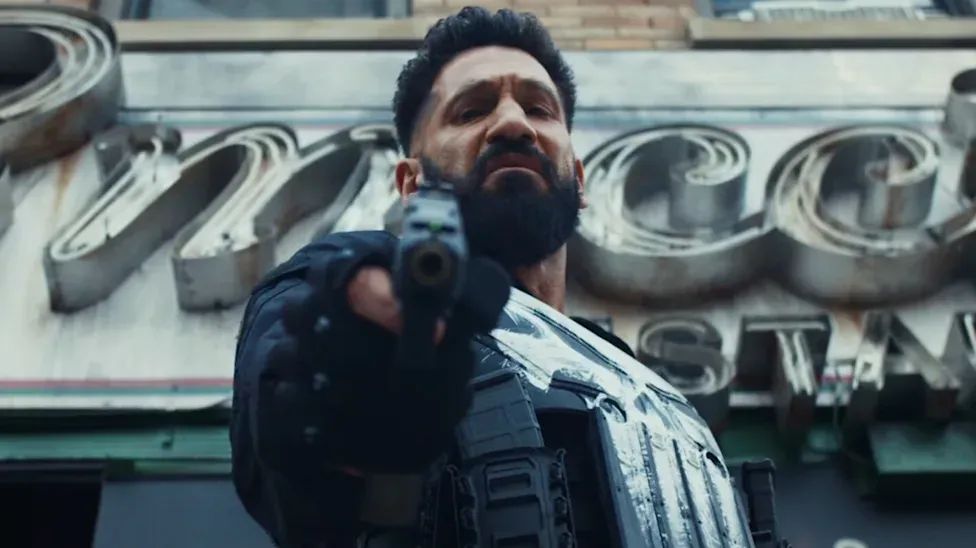
SPOILER ALERT: This rather furiously written missive contains spoilers for the new Marvel Studios Special Presentation: Punisher One Last Kill.
I want to start this by saying that I am on the record many times stating a core truth: Jon Bernthal as Frank Castle is generationally good casting. I adore his emotionally wrought performance, deep empathy, and let’s be real incredibly fucked up sexiness he occasionally unleashes as Frank. I say all of this because I was interested if not apprehensive about Punisher One Last Kill, especially after watching The Bear special “Gary” also co-penned by Bernthal which continued one of my least fave contemporary trends: bringing back the r-word.
As I sat down on a gloomy Monday morning and the strains of Danzig’s "Mother" began to play as Frank does sweaty pull-ups and has another breakdown I began to allow myself to get excited. And as the first act continued my belief was rewarded, with an intriguing and introspective look at Frank and his PTSD. Alas that highlight was set against an Ari Aster Beau is Afraid level paranoid version of “New York City” where everyone is having a nervous breakdown, roving gangs smash windows, and white supremacist coded thugs kill homeless people’s dogs. It was the kind of crime-ridden landscape that Fox News viewers imagine when they say the words New York or even worse... Downtown Los Angeles (scaaaarryy).
If that doesn’t sound like a fun watch then you can turn off now cos things only get worse. As Frank ignores the insanity around him in “Little Sicily” that is seemingly his fault - he killed the Gnucci Crime family who killed his family and now there’s a power vacuum - he grieves his family, mostly his “Babygirl” Bernthal’s delivery of which has become a new vocal stim for me and features heavily in mine and Jason’s breakdown of the one-shot on our podcast at IHeartRadio X-Ray Vision.
I wrote all of the above after watching the episode via screening link earlier this week and recording our episode. Our reaction is out now and I was approaching that conversation though a veil of not knowing the intent of the people who made the special. That's no longer the case. In an interview with ScreenRant, Jon Bernthal, star, producer, and writer of Punisher: One Last Kill made his feelings about the Punisher, Frank Castle, and who the series was for clear.
"Frank belongs to the fans, belongs to the members of the military, members of law enforcement, people who Frank just exists in their hearts."
As a comic book fan, ex-comic book retailer, and longtime comics and pop culture journalist this quote is a nauseating reveal that while Bernthal may well be adept at bringing Frank to life, he misunderstands him just as much as the cops who put the Punisher flag on their car. This feels especially painful as a comics lover seeing as we recently lost Punisher co-creator Gerry Conway who had spent much of the latter part of his career trying to rest his pre-Columbine / post-Vietnam creation from the hands of hyper-political militia, military and law enforcement who saw him not as a complex cautionary tale, but instead a hero to be lionized and looked up to. Someone to "exist in their hearts" as Bernthal so poetically puts it here.
That emotional closeness to people who he seems to think can relate to Frank and his tendency towards violence and struggle is something that Bernthal holds dear, and his passion for vets and specifically comes through in the article.
"There's a group of Marine Raiders and Green Berets that are all here tonight, and these guys have been with me a long time. They're family to me. Their families are family to my family, and it's really the psychology of what happens when people have given so much, sacrificed so much, and lost so much, and then they come back and try and figure out what's next. That's really what the kernel of the idea of going, this sort of version of Frank or the Punisher, however you want to call it, we needed to kind of start with that, that feeling of complete and utter hopelessness, and to feel that you're responsible for everything bad in the world and that there's no light anywhere and you're completely lost."
That introspection comes through early on in the special as I mentioned and felt like something new, though the MCU centering military characters certainly isn't. I will mention here that I am always interested in nuanced explorations of the military and how it impacts people because that really brutal impact was a big part of my childhood. The MCU of course usually goes for a more classically American (aka propaganda) and heroic approach — often with the full funding of the American military behind them — which is why Frank's addition has always felt like an interesting — if complicated — off shoot of that pro-military mentality.
It's clear that grounding his trauma in reality is important to Bernthal but how does that mindset then lead to a third act where Frank gets lost in his trauma and crisis, allowing it to trigger him into a mass shooting and killing spree where he "saves" a family, but murders countless people on the way? The special doesn’t tell us anything new about Frank, in fact it acts as a Cliff Notes version of his origin and back story for people who can’t be bothered to watch his solo series and the connecting shows. If you’re an MCU or comics fan you already know he can kill ppl and that his family are dead, so what’s the purpose of the special?
As the triumphant music soars and slashes another man's throat with a hatchet or blows off someone's head with a gun its hard not to read it as, "well he's doing the good kind of lone shooter killing spree," especially when set to Hatebreed's "I Will Be Heard" which seems like an absolutely insane thing to write but it’s 2026 so that’s par for the course.
Who knew all those late nights at hardcore shows and clubs as a teen would come back to be utilized as important journalistic knowledge and yet here I am still haunted by Jamey Jasta, who important to give him credit here given the sus political implications of the special, allegedly threw a Nazi out of a show a few years ago.
In any case if you haven't experienced “I will be heard” you can now enjoy below.
imagine jon bernthal shooting hella guys in the head to this song and tell me that sequence wasn't specifically made for the worst parts of the internet.
This is also not some radically new misunderstanding of the character which only Bernthal suffers from, this is a constant talking point about the Punisher and has long been driving many of our cultural conversations around him. It's actually so well recorded that Gerry Conway is on the record talking about it numerous, most famously saying that the military wearing the logo was "as offensive as putting a Confederate flag on a government building," in a deleted article at Syfy.
I've talked about this in other interviews. To me, it's disturbing whenever I see authority figures embracing Punisher iconography because the Punisher represents a failure of the Justice system. He's supposed to indict the collapse of social moral authority and the reality some people can't depend on institutions like the police or the military to act in a just and capable way.
The vigilante anti-hero is fundamentally a critique of the justice sysytem, an eample of social failure, so when cops put Punisher skulls on their cars or members of the military wear Punisher skull patches, they're basically sides with an enemy of the system. They are embracing an outlaw mentality. Whether you think the Punisher is justified or not, whether you admire his code of ethics, he is an outlaw. He is a criminal. Police should not be embracing a criminal as their symbol.
It goes without saying. In a way, it's as offensive as putting a Confederate flag on a government building. My point of view is, the Punisher is an anti-hero, someone we might root for while remembering he's also an outlaw and criminal. If an officer of the law, representing the justice system puts a criminal's symbol on his police car, or shares challenge coins honoring a criminal he or she is making a very ill-advised statement about their understanding of the law.
Even that quote has its own contradictions and our conversations around policing have changed since then, but it makes one thing clear. The people that Bernthal is making the Punisher for are not the people he was created for. And the story that he's telling, is not the one that Conway intended he be a part of. Of course, that is the nature of creating characters who are owned by companies and will be worked on by other people. It's terrifying and scary and amazing. But when something becomes a symbol in the real world, like the Punisher has it takes on another layer.
That line between fiction and reality blurring here I suppose is my issue. Those who know me know I adore a violent movie, a complex lead, and a brutal man. Some films I adore that clearly inspired this special like The Raid, The Night Comes for Us, and Dredd are all equally as grotesque and gruesome. I've written extensively about the French New Extremity movement and even used to enjoy torture porn horror. All of that to say I'm not averse to violence in cinema, but art doesn't exist in a vacuum and this version of the Punisher in 2026 represents a sea change in what Disney thinks represents entertainment, heroism, and their brand.
I've lived through many grim dark trends as a child of the '80s but maybe none so surprisingly violent and bleak as a Disney+ streaming special that ends with a shot of a white man in black military garb shooting another white man laying on the floor in the head at the seeming behest of a Black homeless man. The concept of Frank as an attack dog for the underrepresented would be an interesting twist but seems like an unlikely thread to pursue as Frank heads more violently than ever into Spider Man: Brand New Day with a solid 300 new bodies on his conscience. So why do we keep returning to Frank and his repetitive violent path? Bernthal has his thoughts.
"I do believe there's a little bit of Frank Castle [in] everyone, and I feel like there's a reason. There's a reason why people are drawn to this character, and I think it's beyond just sort of the violence and the brutality and the vengeance. I believe it's about this sort of hopelessness that at certain points in our life kind of plagues all of us."
It's an interesting angle to approach the character from, though I believe the true draw of Frank is that we all understand and relate to how grief can drive us to want to do unthinkable things.
It's also deeply funny to me that I'm quoting all this apparently thoughtful commentary on Frank as a relatable character in the context of a very loose and extremely violent adaptation of one of the least accessible — and imho on reread — most offensive Punisher eras of all time: Garth Ennis' and Steve Dillon‘s infamous – and much beloved in some comic book circles — Punisher Max.
Coming out of the comics implosion of the late 90's Punisher Max was one of the many out there takes that bought unfiltered indie creators like Ennis and Dillion to Marvel under upstart EIC Joe Quesada. It was a wild era that reimagined the publisher as a space for edgy adults to play with the boundaries of what superhero comics can be. One of my favorite writers and colleagues Kelly Kanayama is an Ennis expert and has written extensively about just why the series worked for her. I also enjoyed it when as a younger person I first discovered it in second hand collected editions, epic, aggressive, hyper violent, patently and purposefully offensive.
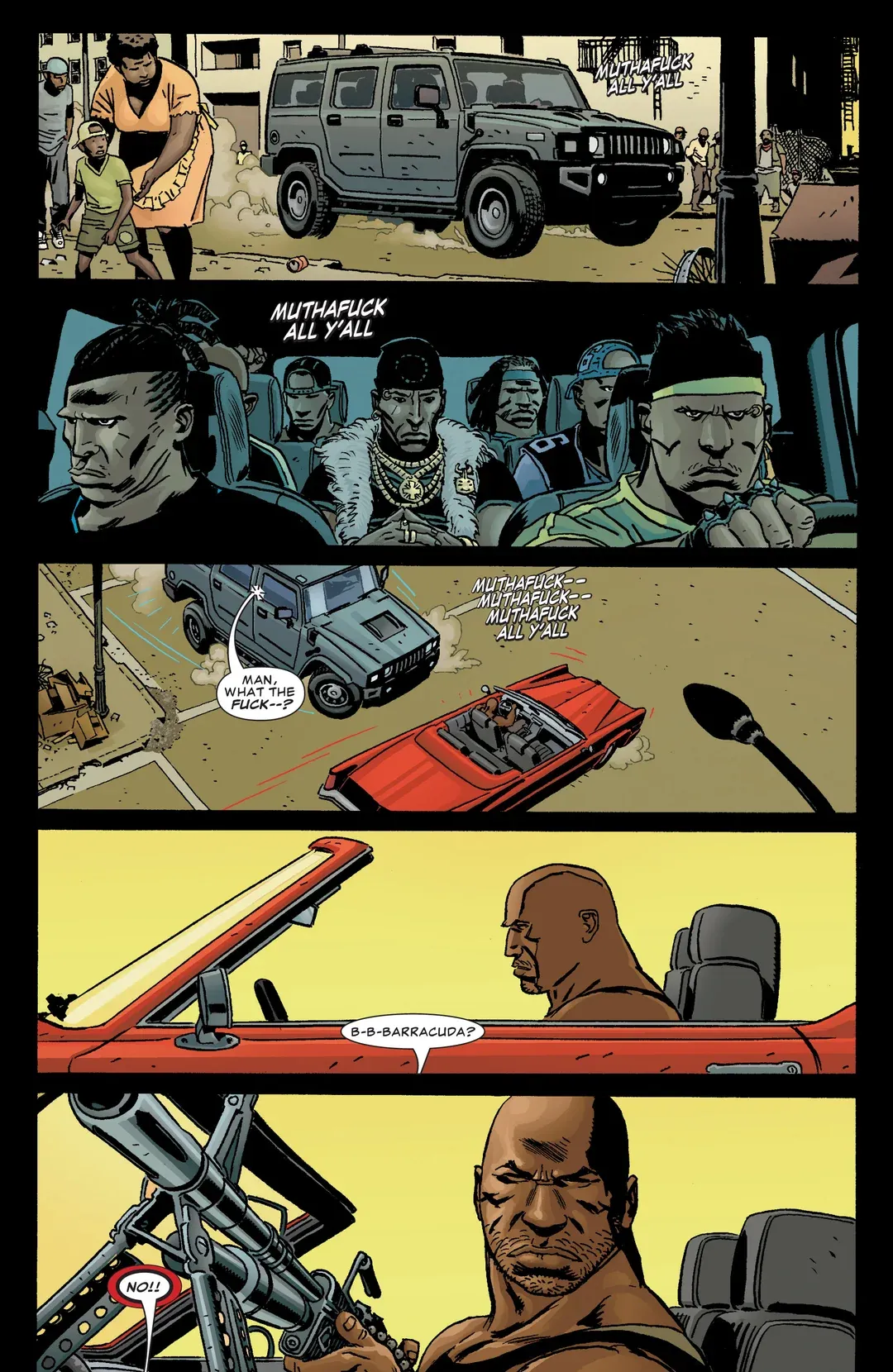
When I worked at the comic book shop I reread it and found it to be far less enjoyable. Even though the cartoonish elements stand out the tropey-ness was hard to ignore! Evil ppl get punished by becoming disabled and then they’re even scarier - in the comic Ma Gnucci‘s limbs are eaten by a polar bear, honestly would have been impressed if they’d committed to the bit that much here - racial stereotypes proliferate the pages, and the rough language was a precursor for Ennis’ most slur-filled shock value project Crossed.
All of that is to say Ennis’ Punisher needs a The Boys level reconsideration — another fucking minefield comic authored by Ennis — for adaptation or at least someone who really understands the Looney Tunes nature of what Dillon brought to the book. To try to balance all of that with a grounded look at PTSD in 48 minutes is in my opinion is pretty much exactly why the special fails to land.
It also exists as an interesting example of Disney embracing a sort of idealistic both-sides-ism. Punisher: One Last Kill comes a week after the finale of Daredevil: Born Again which featured an actively anti-facist story that featured a violent unregulated police, the Anti Vigilate Task Force kidnapping people off the streets and keeping them in cruel camps at the behest of a violent fascistic leader. The special not only feels at odds with that show — seeing as this is set in the same city in a similar timeline and you're telling me the AVTF wouldn't be all over Little Sicily?? When a vigilante is literally committing mass murder lmao ?!? — but also weirdly contradictory of MCU Frank's canon hatred of cops who use the Punisher symbol and people like corrupt AVTF leader Powell who have appropriated his brutal vengeance against the system as a part of it.
It's almost as if Disney said, "one for them and one for us" I'll leave it up to your imagination which side they're on. But how did we get here? When Indiana Jones fought the Nazis no one needed a film from their perspective. Yet, this Punisher special acts as a fantasy for those who have dreamed of killing their neighbors, imagined every poor person is trying to rob them, and that all homeless people are severely mentally ill and drug addicted waiting to kill you. What if all of that was true? And then you got to get a bunch of guns and kill them? And then you were a hero to those around you and faced no consequences? Well, luckily you can now experience that power fantasy brought to life on the Disney+ streaming channel.
Thanks to Annie, Ian, James, Joelle, Khyree, Nick, Ryan, and Steph for being early readers!
Special thanks to Nic Guastella who lent me his editorial eyes, ears, and opinions to shape this one. (Hire them!)
![[Big Screen Baby]: Spider-Man: Brand New Day Offers the MCU and Hollywood a Fresh Start.](https://storage.ghost.io/c/f0/2c/f02c7c8b-320c-4854-959c-296064bf0233/content/images/size/w600/2026/07/spider-header.jpg)